
Chasing light at the Bay of Fires Tasmania
Dated: 28 May 2025
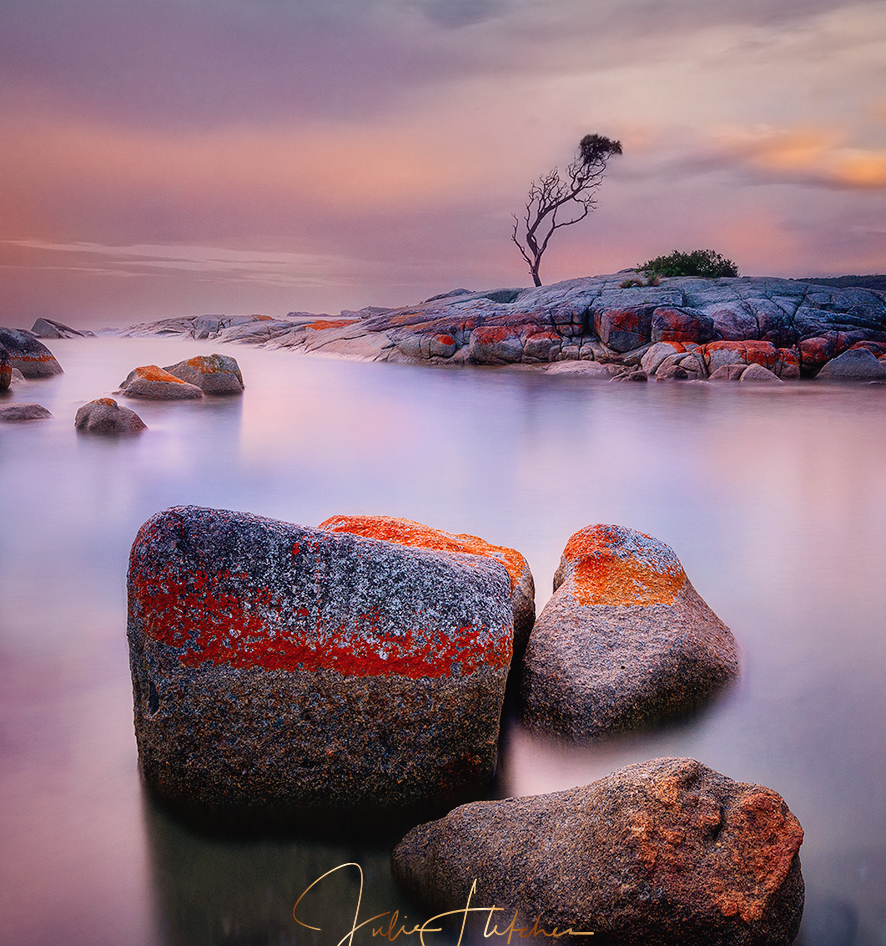
There’s a moment, just before the sun crests the horizon on Tasmania’s east coast, when the world feels completely still. The air is crisp, the sea is calm, and the fiery orange lichen that blankets the granite boulders at the Bay of Fires seems to glow from within. It’s a landscape photographer’s dream—and one of my favourite places in Australia to shoot.
Why the Bay of Fires?
Stretching from Binalong Bay in the south to Eddystone Point in the north, the Bay of Fires is a breathtaking fusion of coastal wilderness, impossibly clear turquoise waters, and those iconic burnt-orange rocks. It’s a place that rewards both wide-angle vistas and intimate detail work. Every visit reveals new compositions shaped by tides, weather, and shifting light.
Best Time to Visit
While you can photograph the Bay of Fires year-round, autumn and early winter are my preferred seasons. The light tends to be softer, the sun rises at a more civilised hour, and there are fewer people around. Mornings are especially magical—the interplay of golden light and the vibrant lichen creates a warm, almost surreal palette against the cool tones of sea and sky.
Photographic Tips
1. Golden Hours are Gold:
Sunrise and sunset provide the best light to accentuate the colour and texture of the rocks. Scout your compositions the day before if you can, and be ready to shoot before first light.
2. Embrace Simplicity:
With such a dynamic foreground, don’t feel the need to cram too much into the frame. A lone rock or the curve of a bay can be more powerful than a cluttered scene.
3. Long Exposures:
On calmer days, a neutral density filter allows for beautiful long exposure work. The motion of the sea contrasts beautifully with the stillness of the rocks.
4. Watch the Tide:
The intertidal zone at the Bay of Fires can create incredible reflections and patterns, but be mindful of slippery surfaces and rising tides.
5. Don’t Forget the Details:
Close-ups of the lichen-covered granite, patterns in the sand, and textures in weathered driftwood all make for compelling images.
Practical Tips
- Base yourself in St Helens or Binalong Bay for easy access to the southern end of the Bay.
- Pack layers—Tasmania’s weather can shift quickly.
- Bring a polariser to cut glare and enhance colour in the water and rocks.
- Respect the land. This is a culturally significant area to the Palawa people, and its fragile ecosystem deserves care.
Recent Posts
Red Centre Workshop May 2027
Photographers — this is your moment! Now online and ready to book.Join me, Julie Fletcher, for an 8-day Red Centre photography adventure you’ll never forget.Capture the raw beauty of outback, and more — with hands-on guidance to elevate your photography.It’s immersive, inspiring, and designed to take your skills to the next level. Hope to see you there.
Red Centre Photography workshop May 2026
Another incredible Red Centre Photography Workshop has wrapped up, and what a week it was. From the rich reds to vibrant greens and ancient landscapes to spectacular trees and gorges, dramatic sunsets, and clear star-filled skies, the Red Centre once again delivered unforgettable photographic opportunities. One of the highlights for me is always seeing participants […]
Channel Country Adventure outback QLD
Over the past couple of months I embarked on an unforgettable photographic journey through the rugged Channel Country in Outback Queensland, one of Australia’s most unique and dynamic landscapes. Basing myself in Longreach, I travelled extensively through the surrounding towns of Winton, Windorah and Quilpie, documenting a region that was constantly transforming under the influence […]
Testimonial for chromaluxe metal print
Always nice to be appreciated for my hard work. Below is a lovely message a recent client sent me. This image is special and unique. This windmill is no longer here. The print has just arrived……. and it’s F#€%ing amazing The Flinders Rangers are a special spot for my family!!!! So much so part of […]
Channel Country outback QLD
Channel Country, Outback Queensland – Colours, Patterns and Perspective The Channel Country in outback Queensland is one of Australia’s most quietly powerful photographic landscapes. Shaped by extreme cycles of drought and flood, it’s a place where subtlety matters — where colour, pattern and light do the heavy lifting rather than obvious landmarks. For landscape photographers, […]