
Chasing Winter: Three Months Photographing Cradle Mountain and doing the hard yards!
Dated: 6 August 2025
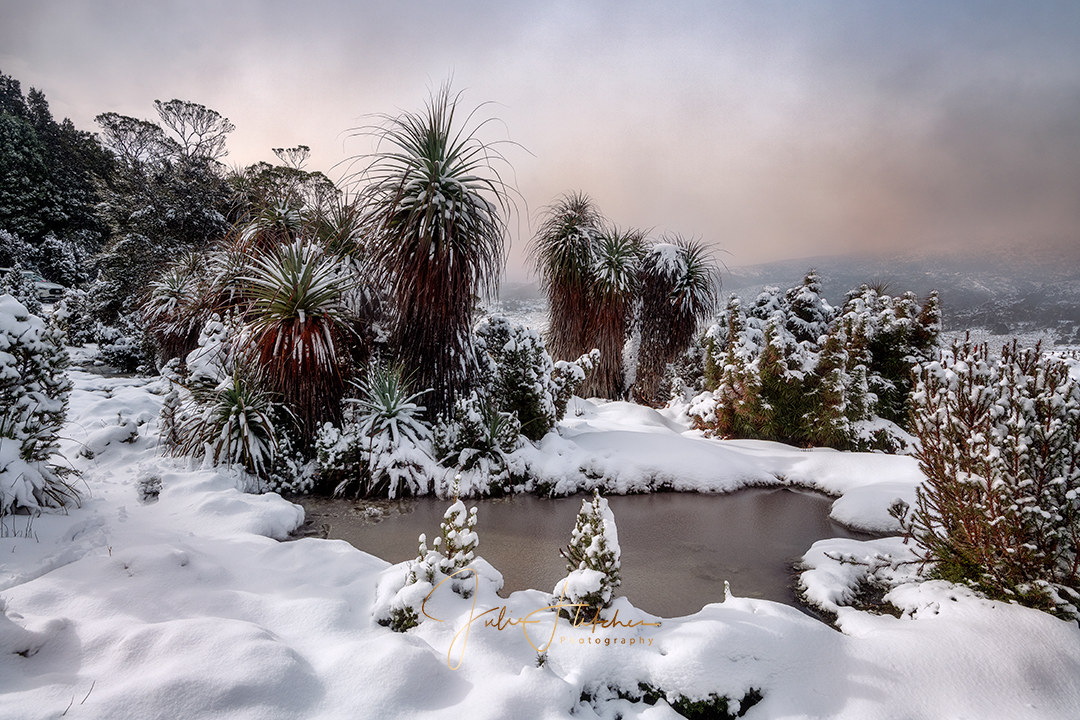
Spending three months photographing Cradle Mountain in winter sounds like the dream—snow-capped peaks, frosty mornings, mist rolling over alpine lakes. But behind those peaceful, moody images lies a whole lot of planning, persistence, and cold fingers.
This season I committed to chasing winter across Tasmania’s highlands, basing myself around the iconic Cradle Mountain-Lake St Clair National Park. What I found was equal parts beauty and challenge.
weather watching becomes a full-time job
Winter weather in Tasmania’s alpine regions is wildly unpredictable. I’ve spent countless hours checking mountain forecasts, radar, and wind charts trying to time my shoots. Even with all that prep, the conditions can change in minutes. Clear skies can give way to heavy snow, and calm days can suddenly whip up into 60km/h wind gusts.
But every now and then, the gamble pays off. And when it does, winter landscape photography in tasmania delivers scenes that are nothing short of magical.
the risk and reward of frozen roads and icy trails
Getting to these locations isn’t always straightforward. Snow and ice on access roads means checking alerts daily. Some mornings start in the dark with a slow, cautious drive—hoping the road hasn’t iced over completely overnight. Or just getting the night before and sleeping in the car.
Once on foot, the risk doesn’t let up. Trails can be slippery or fully buried under snow. I’ve relied heavily on microspikes, waterproof boots, and trekking poles. Some hikes are short but steep, and others are long, cold slogs. The gear on your back suddenly feels much heavier when you’re trudging through fresh powder at altitude.
the fitness factor no one talks about
Photographing cradle mountain in snow isn’t just a creative challenge—it’s physical and the risk of injury is high. You need stamina to hike in snow, mental endurance to sit still in the cold waiting for the right light, and resilience to go again the next day when conditions haven’t gone your way.
I don’t think enough people talk about the fitness needed for consistent alpine photography or landscape photography in general. I’ve trained for this in my own quiet way over the years—but the daily hikes, weight of gear, and sharp cold push you to your limits in the best kind of way.
gear that can take a beating
Winter conditions are brutal on camera gear. Batteries die fast, lenses fog, and tripods freeze. My go-to setup includes multiple batteries (kept warm inside my jacket), a solid weather-sealed camera body, and lens cloths everywhere. I also pack rain covers, gloves that allow me to change settings, and enough layers to survive a blizzard—or at least wait out one.
What’s often forgotten in winter alpine photography is the personal gear. Proper thermals, waterproof layers, gaiters, and warm boots and waterproof socks are my go to and mean I can stay out longer and be more comfortable when the moment finally happens.
the reward builds over time
Spending an extended period photographing one region in winter allows you to really learn it. The light, the access points, the small details that shift with the weather. Some days yield nothing but soaked socks and moody grey skies. But as the weeks turn over, the opportunities stack up.
A fresh snowfall here. A clearing fog there. And suddenly, your patience pays off with a scene that lasts only a few minutes—but becomes one of your best.
That’s the beauty of cradle mountain winter photography—it rewards those who wait, who return, who keep showing up even when the forecast is grim and do the hard yards.
Many of my images from this winter at Cradle Mountain are available as fine art prints on my website. If you’re looking to bring a piece of Tasmania’s alpine magic into your home, take a browse through the gallery.
Recent Posts
Red Centre Workshop May 2026
Photographers — this is your moment! Now online and ready to book.Join me, Julie Fletcher, for an 8-day Red Centre photography adventure you’ll never forget.Capture the raw beauty of outback, and more — with hands-on guidance to elevate your photography.It’s immersive, inspiring, and designed to take your skills to the next level. Hope to see you there.
Wilderness Photographer of the year Judge 2025
Another year for me judging the Wilderness Photographer of the Year — and wow, the standard was incredible, especially in the Nature category. I spent a long time deliberating over the final 15 images across the three categories, and the talent this year made it no easy task. This competition is a fantastic one to […]
Red Centre workshop 2025
Testimonial:“An absolutely epic trip! The locations were awesome and so well thought out — every spot offered something unique and inspiring. Julie’s passion for the area shone through and her strategic planning meant we were always in the right place at the right time, and the food was fantastic too! I really valued the method […]
Online training with your own images. Book now!
Testimonials…… “I was trying to find my way back to the joy of photography and recently did an outback trip with my family. I got the camera out again, and while I was super proud of what I’d captured, I dreaded the editing once I got home. It had been a long time since I’d […]
Camera Settings do you really know what yours can do?
Know your camera well, free your creativity. Knowing where and how to adjust your camera settings is one of the most valuable skills a photographer can have. Out in the field, conditions rarely stay the same for long—light shifts, clouds roll in, wildlife moves, or the scene unfolds faster than you expect. If you have […]